New Products
 Earth-Friendly Products
 Biotium Choice Antibodies
 Special Offers
 Quick Order Tool
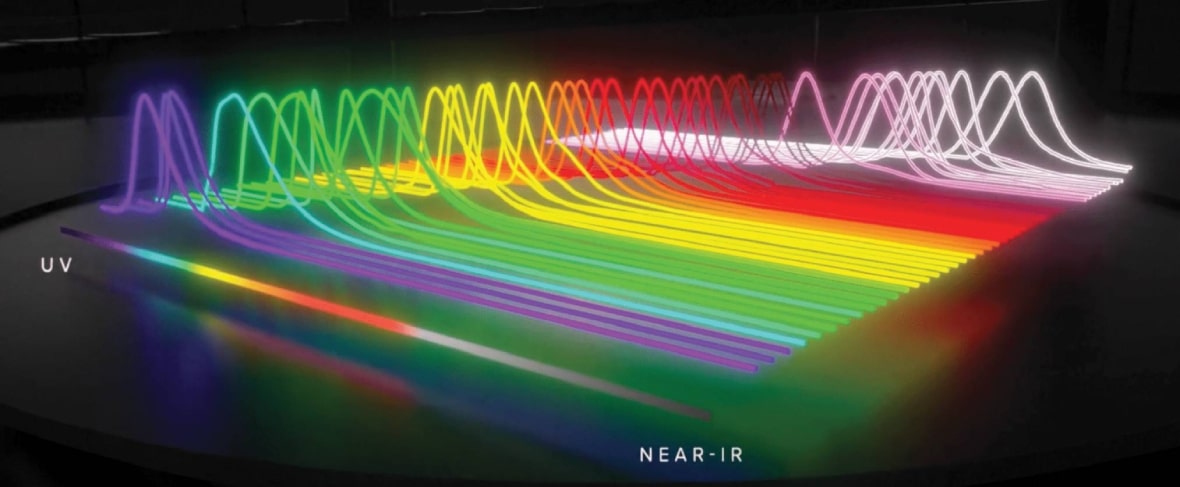

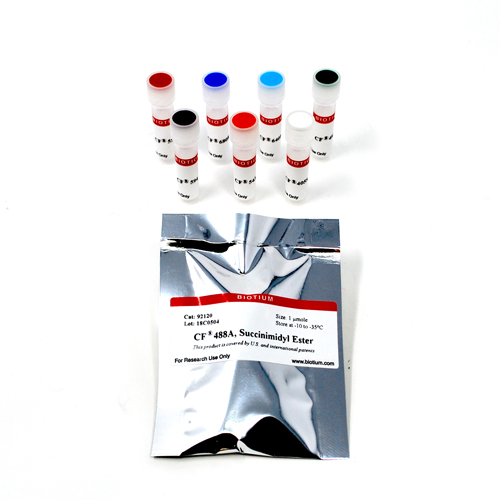
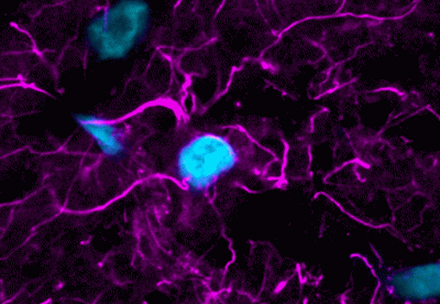
Achieve Clearer Fluorescent Results with CF® Dyes
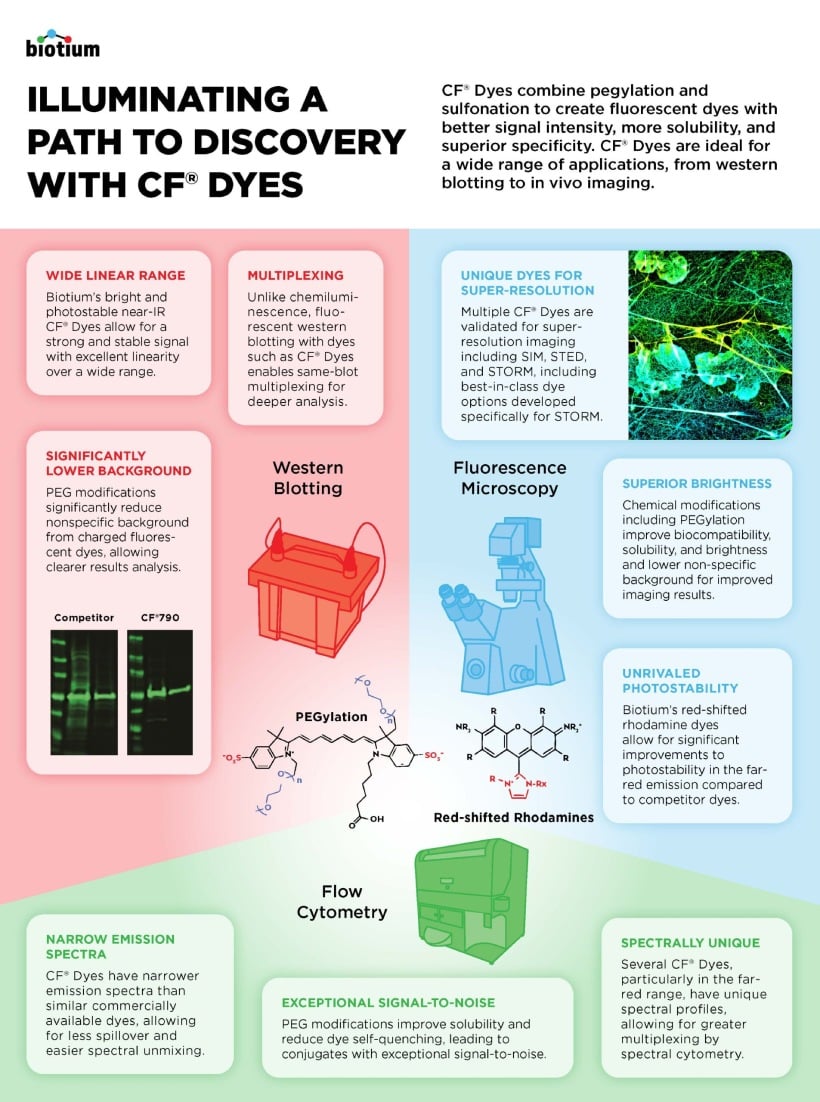
CF® Dyes are a series of highly water-soluble fluorescent dyes spanning the visible and near-infrared spectrum for labeling biomolecules such as proteins and nucleic acids. Developed in house by our industry-leading chemists, CF® Dyes offer superior brightness, photostability, and signal-to-noise when compared to other commercially available fluorescent dyes. Watch our video below to learn how CF® Dyes can offer clearer fluorescent resultsd
Explore CF® Dye Applications

Choose the Best CF® Dye for Your Next Experiment
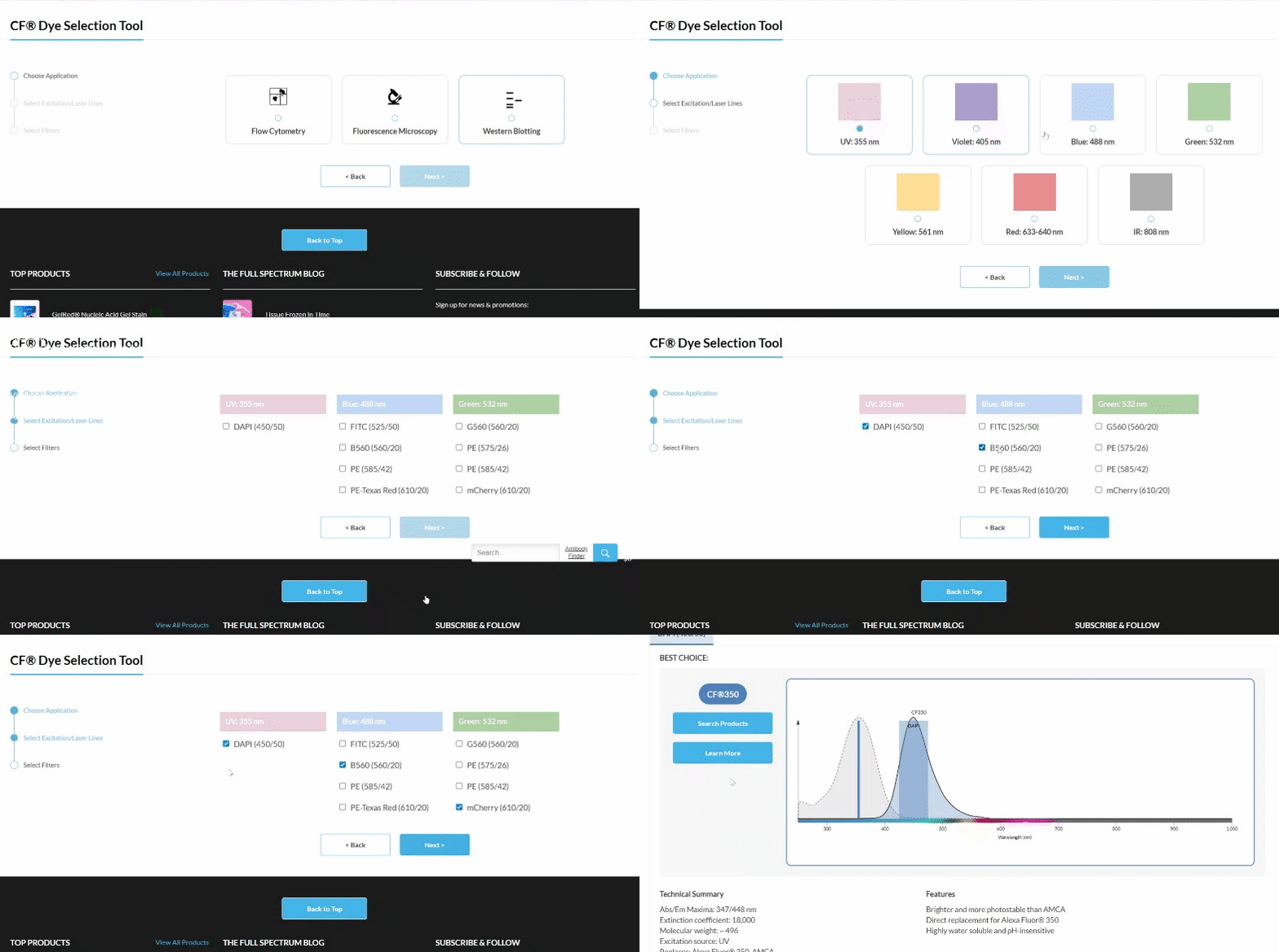
Check out our handy CF® Dye Selection Tool to find the optimal CF® Dye for a specific laser/filter combination for microscopy, flow cytometry, or western blotting.

Learn More About CF® Dyes in Our eBook
In this eBook, you will learn more about:
- The history of fluorescent dyes in life science research
- The development and advantages of CF® Dyes
- Using CF® Dyes for specialized applications such as super-resolution microscopy or spectral flow cytometry