New Products
 Earth-Friendly Products
 Biotium Choice Antibodies
 Special Offers
 Quick Order Tool

A PCR-Based Method to Analyze Microbial Viability
Introduction to Viability PCR (v-PCR)
Reliable detection of live microbes and viruses is vital across many sectors. Traditional methods of measuring microbial viability are time-consuming and often ineffective for unculturable organisms. Viability PCR (v-PCR) offers a culture-free alternative. Biotium pioneered v-PCR with PMA and PMAxx™ dyes, which provide superior dead cell selectivity over culture methods and older EMA v-PCR dyes.
Advantages of v-PCR with PMA & PMAxx™
- Sensitive and rapid viability analysis
- Allows strain-specific viability analysis
- Validated and published for dozens of bacteria, fungi, and viral species
- Compatible with Next-Generation Sequencing applications
- Suitable for complex sample types, including soil, feces, water/wastewater, biological specimens, and food
An Industry Leader in v-PCR
PMA is the v-PCR dye of choice among industry leaders, and has been validated in hundreds of peer-reviewed publications and numerous strains of bacteria, fungi, and viruses. v-PCR has been most widely used in bacteria, but there are also dozens of publications using v-PCR in yeast and fungi, viruses, as well as a variety of other cell types such as archaea, amoeba, and parasites.
Published & Validated Applications for v-PCR include:
- Microbiome Studies
- Environmental Testing
- Probiotic Research
- Clinical Testing
- Food & Water Sanitation
- Wine Fermentation
- Microbial Sequencing
Read Environmental Studies Validating v-PCR

literature digest
Literature Digest: Monitoring Viable Bacteria in the Environment with PMA and PMAxx™
Use v-PCR to monitor viral capsid integrity
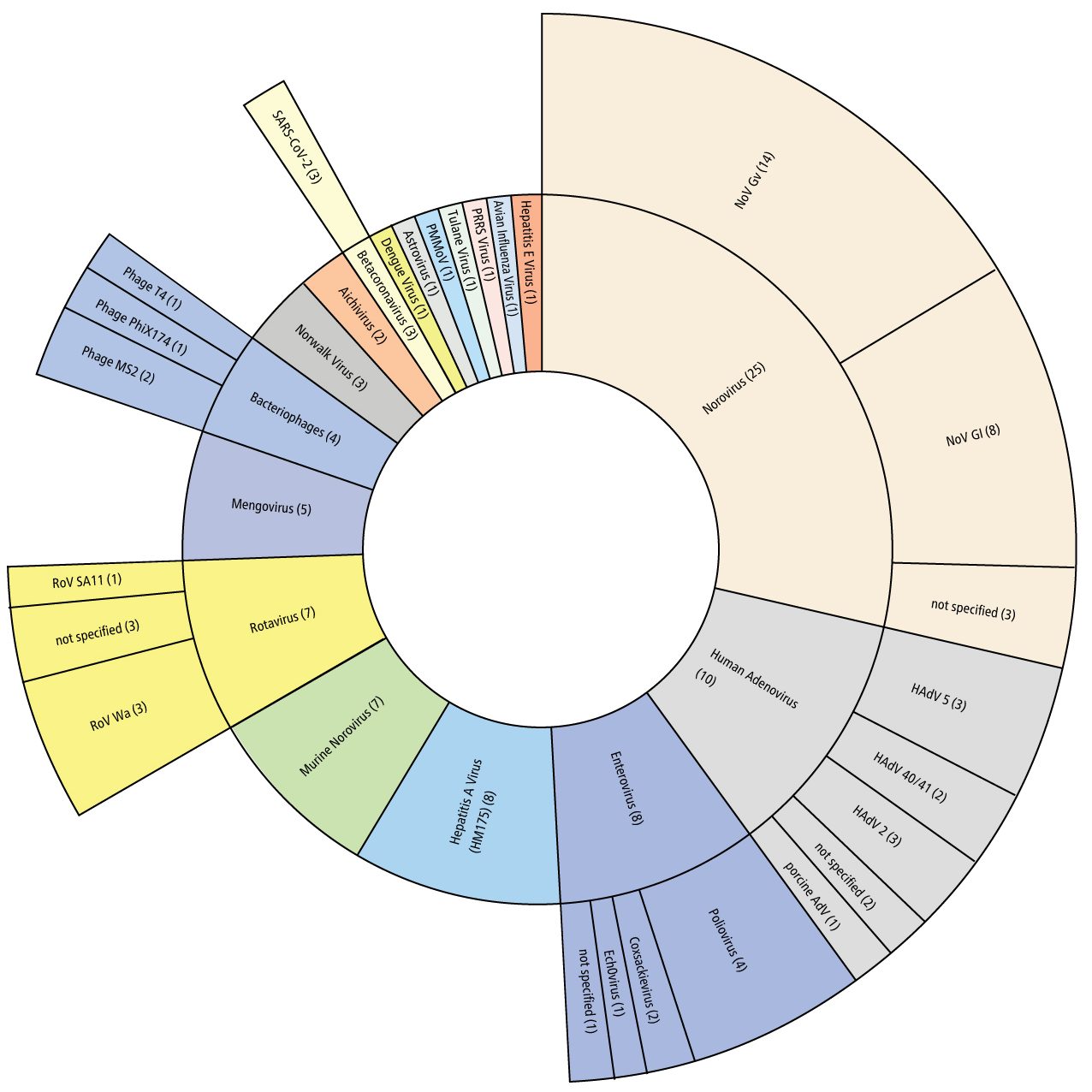
v-PCR is a proven method for monitoring capsid integrity for dozens of viral strains, including SARS-CoV-2.
The figure displays the genus and strain number of viruses investigated for using v-PCR to monitor capsid integrity in peer-reviewed studies in the last decade (2009 to 2021) in the fields of food safety and environmental virology. In cases where no strain name was listed, the virus is referred to as ‘not specified’.
Read Papers Validating v-PCR for Viral Integrity
Literature Digest
Literature Digest: Viral Integrity with PMA & PMAxx™
How v-PCR works
Mechanism of v-PCR with PMAxx™ or PMA
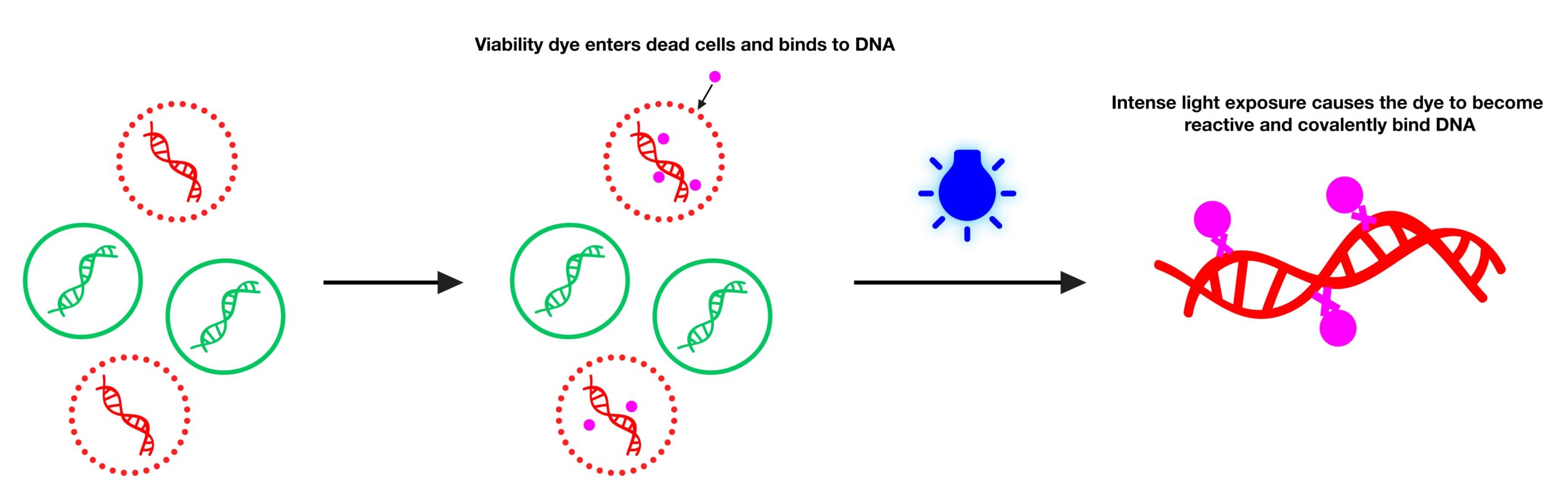
v-PCR Workflow

Workflow Modifications
Many publications have used modifications of the basic protocol for specialty applications. For example, for large, dilute volumes, samples can be filtered onto a membrane, followed by dye treatment and photolysis on the membrane itself. Opaque, complex samples, such as soil or feces, generally need a higher dye concentration and longer light exposure. In addition, sample dilution can also help with opaque samples. Alternatively, some users choose to perform qPCR directly on bacterial lysates, instead of purifying the DNA first.
PMA & PMAxx™: The Industry Standard For v-PCR
PMA is validated in hundreds of journal articles
Since Biotium first developed PMA, there have been hundreds of publications on the use of the dye in many sample types including dozens of bacterial strains, biofilms, yeast, fungi, viruses, and eukaryotic cells. PMA has been used in such applications as food and water safety, environmental testing, clinical testing, probiotic research, and microbiome studies. Furthermore, PMA has been used in conjunction with qPCR, NextGen Sequencing (NGS), Sanger sequencing, and Loop-mediated Isothermal Amplification (LAMP).
PMAxx™ is a superior alternative to PMA
While PMA is generally effective at differentiating between live and dead bacteria by qPCR, it does not completely eliminate PCR products from dead cell DNA. This could potentially give false positive results. PMAxx™ was designed by Biotium scientists to be a superior alternative to PMA. PMAxx™ is much more effective at eliminating PCR amplification of dead cell DNA, and therefore provides the best discrimination between live and dead bacteria.
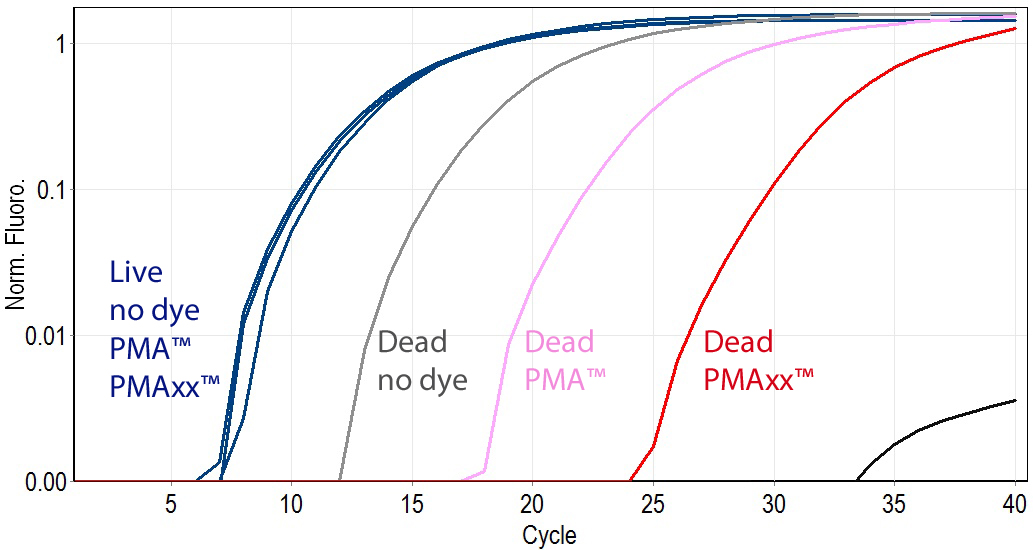
PMA and PMAxx™
Starter Kits for v-PCR
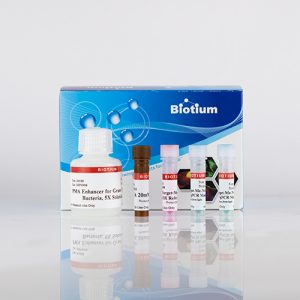
The Viability PCR Starter Kits contain the materials that you need for selective detection of viable cells using either PMA or PMAxx™ viability dye and qPCR. These kits can be used with any cell type of your choosing. You also have the choice of selecting a kit with or without the Enhancer for Gram Negative Bacteria. Each kit contains reagents sufficient to treat 80 bacterial cultures and perform 200 PCR reactions.
Kits include:
- PMA dye or PMAxx™ dye
- Forget-Me-Not™ EvaGreen® qPCR Master Mix
- ROX reference dye
- PMA Enhancer (gram-negative strains only)
Not included but required:
- primers to amplify your cell type of interest
- DNA extraction kit or reagents
v-PCR Starter Kits
| Product Name | Catalog No. | Viability Dye | Target Cell Type |
|---|---|---|---|
| Viability PCR Starter Kit with PMA | 31075 | PMA | Any cells |
| Viability PCR Starter Kit with PMAxx™ | 31075-X | PMAxx™ | Any cells |
| Viability PCR Starter Kit with PMA and Enhancer | 31076 | PMA | Gram-negative bacteria |
| Viability PCR Starter Kit with PMAxx™ and Enhancer | 31076-X | PMAxx™ | Gram-negative bacteria |
PMA Enhancer for Gram-Negative Bacteria
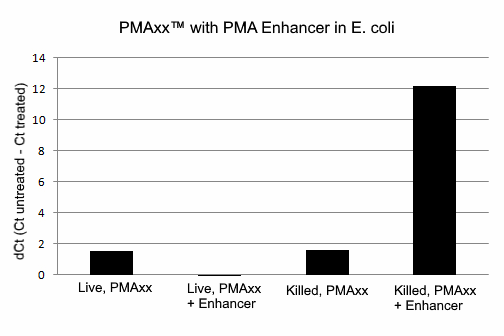
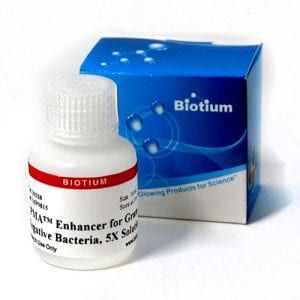
PMA Enhancer for Gram Negative Bacteria was designed to improve discrimination between live and dead gram-negative bacteria in v-PCR. When a sequence from a gram-negative bacteria is amplified by PCR, samples pre-treated with Enhancer show a decrease in the signal from dead cells, with no change in the signal from live cells. PMA Enhancer is compatible with PMAxx™ as well as PMA.
PMA Enhancer for Gram-Negative Bacteria
| Product Name | Catalog No. | Features |
|---|---|---|
| PMA Enhancer for Gram Negative Bacteria, 5X Solution | 31038 | • Improves live/dead discrimination in gram-negative strains |
Photoactivation Devices
Devices Designed for Photolysis of v-PCR Samples
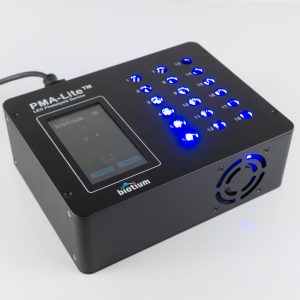
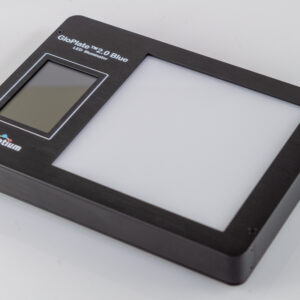
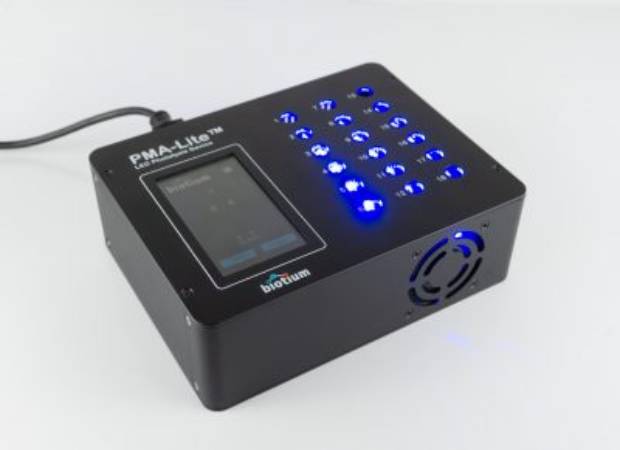
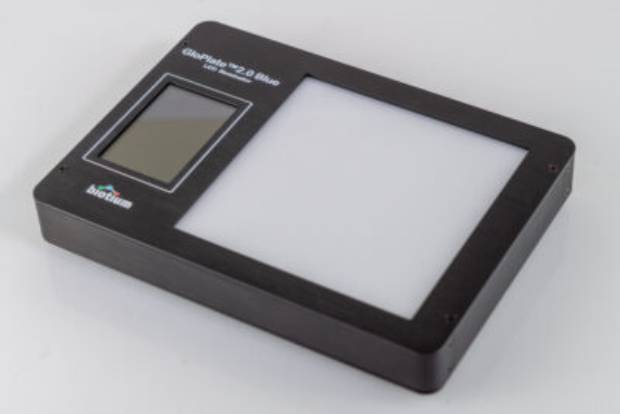
Biotium offers the only photoactivation devices on the market that are specifically engineered for the optimal photolysis of samples treated with PMAxx™ or PMA for v-PCR. The PMA-Lite™ 2.0 LED Photolysis Device is compatible with microcentrifuge tubes, while the Glo-Plate™ 2.0 Blue LED Illuminator is designed for microplates or larger tubes. Both photoactivation devices provide consistent and uniform illumination of samples in a temperature-controlled environment, for robust and reliable results.
For Microcentrifuge Tubes
PMA-Lite™ 2.0 LED Photolysis Device Features:
- Uniform illumination to up to 18 microcentrifuge tubes
- Efficient activation of v-PCR dyes, such as PMAxx™ and PMA
- Timer for 5-45 minutes of photoactivation
- Long-lasting LED light
For Microplates and Large Tubes
Glo-Plate™ 2.0 Blue LED Illuminator Features:
- Uniform illumination for microplates, tubes, and gels
- Efficient activation of v-PCR dyes, such as PMAxx™ and PMA
- Timer for 5-45 minutes of photoactivation
- Long-lasting LED lights

Strain-Specific v-PCR Kits
Strain-specific v-PCR kits are designed for selective detection of viable bacteria from a specific strain using PMAxx™ or PMA dye and real-time PCR. The kits contain PMA dye or PMAxx™ dye, Forget-Me-Not™ EvaGreen® qPCR Master Mix, and validated PCR primers for detection of selected strains of bacteria that are of widespread interest to food safety, public health, and/or antibacterial research. Each kit contains sufficient reagents to treat 80 bacterial cultures with PMAxx™ or PMA and perform 200 PCR reactions.
Don’t see your strain of interest? Let us know at [email protected]
PMA Real-Time PCR Bacterial Viability Kits are available for:
- Salmonella enterica
- Mycobacterium tuberculosis
- Staphylococcus aureus
- Staphylococcus aureus (methicillin-resistant)
- Listeria monocytogenes
- E. coli
- E. coli O157:H7
- Legionella pneumophila
Each strain-specific kit includes:
- PMA dye or PMAxx™ dye
- Forget-Me-Not™ EvaGreen® qPCR Master Mix
- ROX reference dye
- PMA Enhancer (gram-negative strains only)
- Validated PCR primers for specific bacterial strain
Strain-Specific Bacterial Viability PCR Kits
| Bacteria Strain | Gene name | Kit with PMA (catalog #) | Kit with PMAxx™ (catalog #) |
|---|---|---|---|
| Salmonella enterica | invA | 31033 | 31033-X |
| Mycobacterium tuberculosis | groEL2 | 31034 | N/A |
| Staphylococcus aureus | nuc | 31035 | N/A |
| MRSA | mecA | 31036 | N/A |
| E. coli O157:H7 | Z3276 | 31037 | 31037-X |
| E. coli | uidA | 31050 | 31050-X |
| Listeria monocytogenes | hly | 31051 | 31051-X |
| Legionella pneumophila | mip | 31053 | N/A |